Physical Address
304 North Cardinal St.
Dorchester Center, MA 02124
Physical Address
304 North Cardinal St.
Dorchester Center, MA 02124
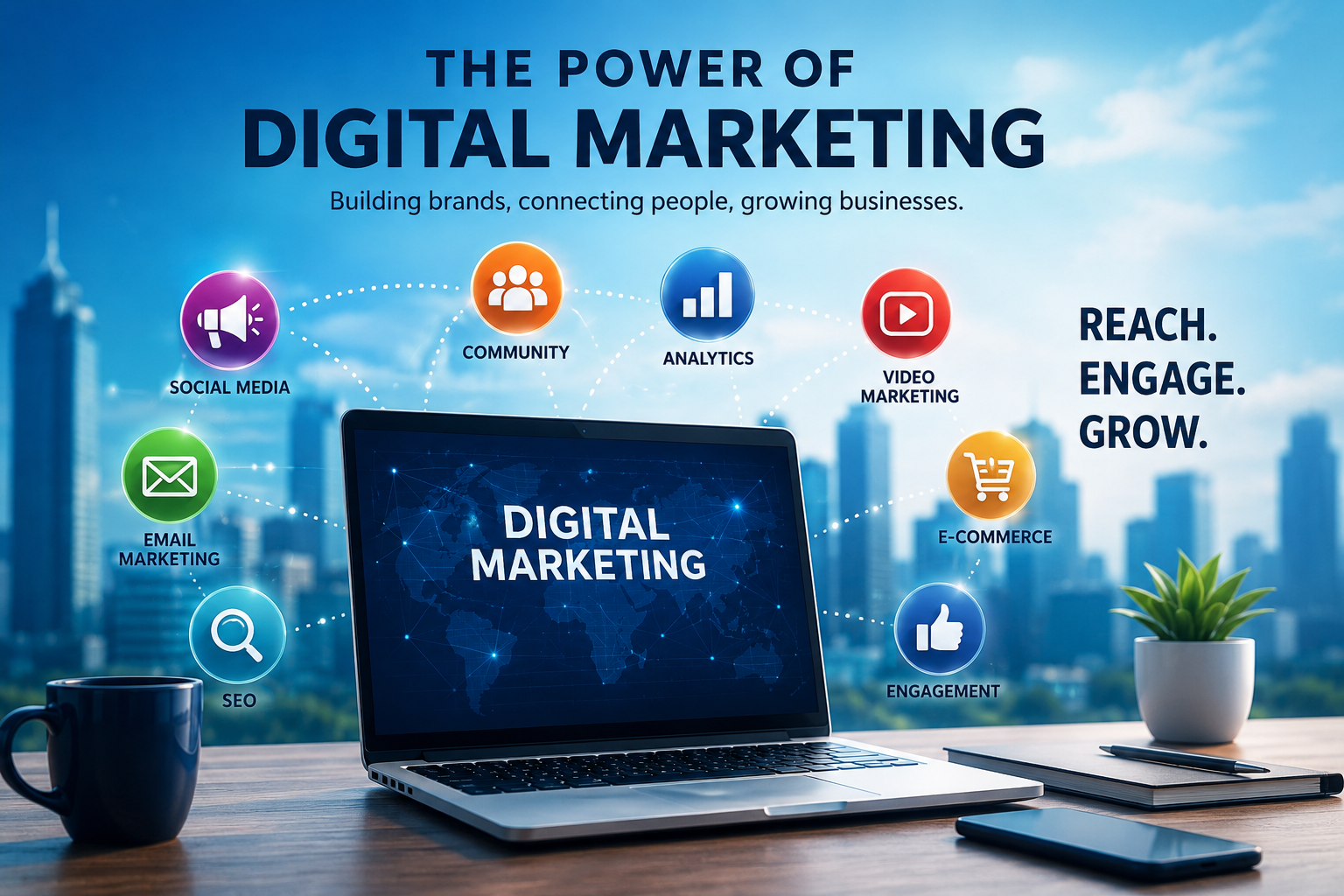
In today’s fast-changing business environment, digital and modern marketing have become essential tools for organizations of all sizes. Unlike traditional marketing, which mainly relies on newspapers, television, radio, and billboards, modern marketing uses digital technologies such as social media, websites, email, search engines, and mobile applications to reach customers. The widespread use of the internet and smartphones has transformed how businesses communicate with consumers, making marketing more effective, interactive, and measurable.
This article explores the major advantages of digital and modern marketing and explains why businesses should adopt these strategies to achieve sustainable growth.
Digital marketing refers to the promotion of products and services using digital channels such as websites, search engines, social media platforms, email, and mobile applications. Modern marketing is a broader concept that combines digital technologies with customer-centered strategies, data analysis, innovation, and personalized communication to build long-term relationships with customers.
One of the greatest advantages of digital marketing is the ability to reach customers worldwide. Businesses can advertise their products and services across different countries without opening physical branches. This allows even small businesses to compete in international markets.
Digital marketing is generally more affordable than traditional marketing. Businesses can promote their products through social media, email campaigns, and online advertisements at a lower cost than television or newspaper advertising. This makes it ideal for startups and small businesses with limited budgets.
Modern marketing allows businesses to target specific audiences based on factors such as age, gender, location, interests, education, and purchasing behavior. This improves advertising efficiency and increases the likelihood of converting potential customers into buyers.
Digital platforms allow businesses to communicate directly with customers through comments, messages, live chats, emails, and social media interactions. This two-way communication builds trust, strengthens customer relationships, and improves customer satisfaction.https://muuqtech.com/2026/07/08/mystic-labs-cbd-review/
Unlike traditional marketing, digital marketing provides detailed performance data. Businesses can monitor website traffic, advertisement performance, customer engagement, sales conversions, and return on investment (ROI). This information helps organizations improve future marketing strategies.
A strong online presence helps businesses build brand recognition. By consistently publishing valuable content, engaging with customers, and maintaining active social media accounts, companies can increase their visibility and establish a positive reputation.
Modern marketing uses customer data to create personalized experiences. Businesses can recommend products, send customized emails, and display relevant advertisements based on customer preferences. Personalization increases customer satisfaction and encourages repeat purchases.https://muuqtech.com/2026/07/08/mystic-labs-cbd-review/
Digital marketing helps businesses attract more potential customers through search engines, social media, and online advertising. Effective marketing campaigns increase website traffic, generate qualified leads, and improve sales performance, leading to higher profits.
Businesses can instantly communicate with customers through email, messaging applications, websites, and social media platforms. Customers receive quick responses to their questions, improving service quality and customer loyalty.
Companies that adopt modern marketing technologies often perform better than competitors who rely solely on traditional marketing methods. Digital tools enable businesses to respond quickly to market changes, customer demands, and emerging trends.
Unlike physical stores with limited operating hours, online marketing operates 24 hours a day, seven days a week. Customers can browse products, make purchases, and contact businesses at any time, increasing convenience and sales opportunities.
Digital marketing supports long-term business growth by attracting new customers, retaining existing ones, increasing customer loyalty, and improving overall business performance. It also enables businesses to expand into new markets with fewer financial risks.
Despite its many advantages, digital marketing also presents some challenges. Businesses may face intense competition, changing technology, cybersecurity threats, negative online reviews, and the need for continuous learning. However, with proper planning and effective strategies, these challenges can be successfully managed.
Digital and modern marketing have revolutionized the way businesses promote their products and interact with customers. Their ability to reach global audiences, reduce marketing costs, provide measurable results, improve customer engagement, and increase sales makes them essential for success in today’s competitive business environment. Organizations that embrace digital marketing strategies are better positioned to achieve sustainable growth, build strong customer relationships, and remain competitive in the digital economy.
