Physical Address
304 North Cardinal St.
Dorchester Center, MA 02124
Physical Address
304 North Cardinal St.
Dorchester Center, MA 02124

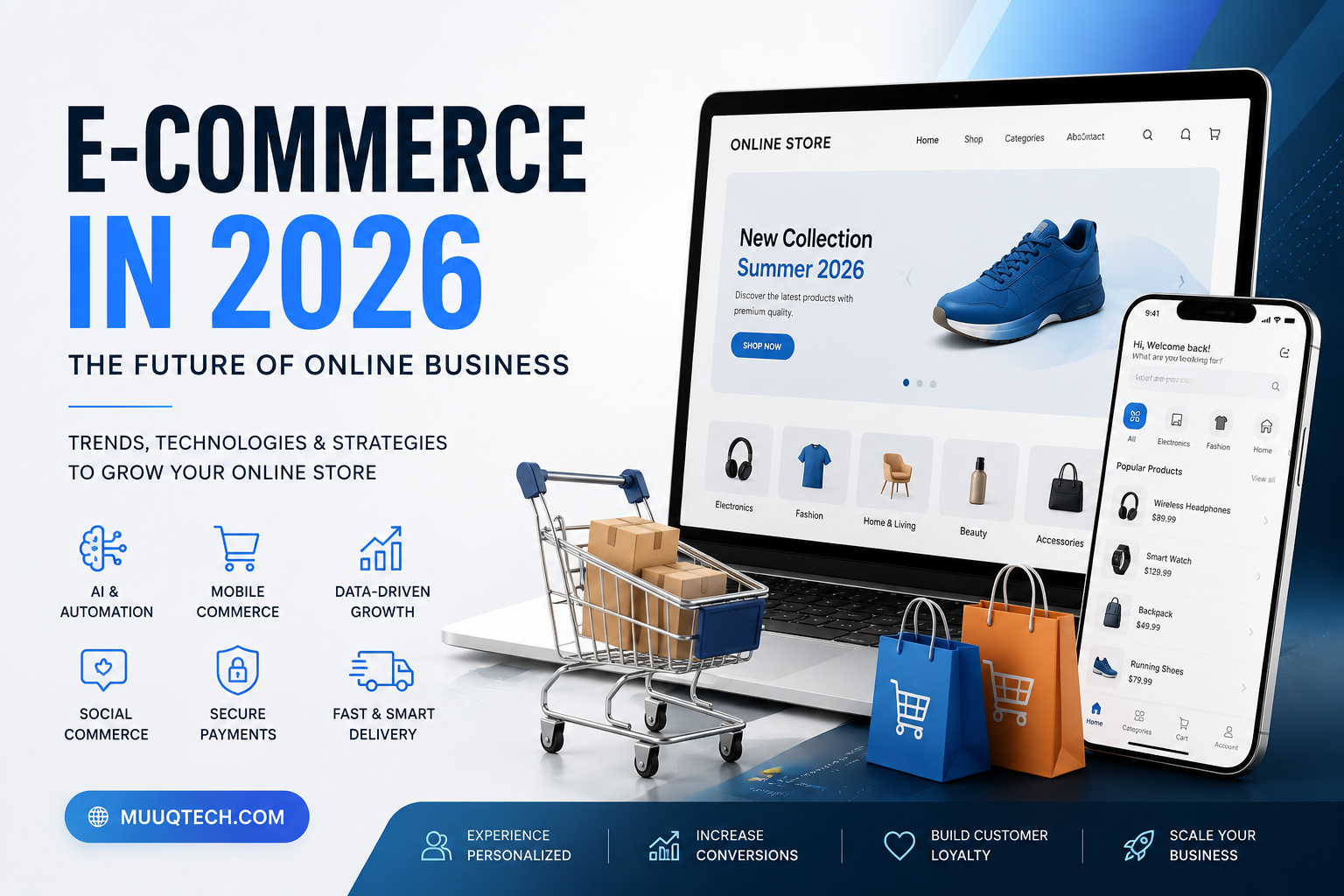
Meta Title: E-Commerce in 2026: Trends, Strategies & Complete Guide for Online Business Success
Meta Description: Discover the latest e-commerce trends in 2026, including AI, social commerce, mobile shopping, SEO, digital marketing, and proven strategies to grow a profitable online business.
Focus Keyword: E-Commerce in 2026
Secondary Keywords:
The e-commerce industry is experiencing its biggest transformation yet. In 2026, online businesses are no longer competing solely on price—they compete on customer experience, artificial intelligence, personalization, delivery speed, trust, and brand authority.
Modern consumers expect websites to load instantly, recommend relevant products, provide secure payment options, and offer seamless shopping experiences across every device.
Whether you’re launching your first online store or scaling an established business, understanding today’s e-commerce landscape is essential for long-term success.
E-commerce (Electronic Commerce) refers to buying and selling products or services over the internet. It allows businesses to reach customers worldwide without relying on physical stores.
Common business models include:
The accessibility of online platforms has made e-commerce one of the fastest-growing sectors in the global economy.
Several factors continue to accelerate the growth of online shopping:
Businesses that embrace these trends are better positioned to attract, convert, and retain customers.
Artificial Intelligence has become a core technology for successful online stores.
AI helps businesses:
Companies using AI often achieve higher conversion rates and stronger customer satisfaction.
Customers now expect personalized shopping experiences.
Leading online retailers customize:
Personalization increases engagement, repeat purchases, and customer loyalty.
More than half of online purchases now occur on mobile devices.
To remain competitive, websites should feature:
A mobile-first strategy is no longer optional—it’s essential.
Consumers increasingly discover and purchase products through social media.
Popular methods include:
Strong social media engagement can significantly increase brand visibility and sales.
Voice assistants are changing how consumers search online.
Businesses should optimize content using:
Voice search optimization helps improve visibility in AI-powered search experiences.
Customers increasingly support environmentally responsible brands.
Sustainable practices include:
Sustainability builds customer trust and strengthens long-term brand reputation.
Search Engine Optimization (SEO) remains one of the most effective ways to generate consistent organic traffic.
Successful e-commerce SEO includes:
Target keywords with strong search intent such as:
Publish valuable content regularly, including:
Helpful content attracts both search engines and potential customers.
Optimize your website by:
Every product page should include:
Successful online stores combine SEO with multiple marketing channels.
These include:
A diversified marketing strategy reduces dependence on a single traffic source.
Businesses often face:
Addressing these challenges requires continuous optimization and data-driven decision-making.
To build a thriving e-commerce business:
E-commerce in 2026 is driven by innovation, personalization, and customer-centric experiences. Businesses that embrace artificial intelligence, invest in SEO, optimize for mobile users, and deliver exceptional service are well-positioned for long-term growth.
Success in today’s digital marketplace is no longer about simply selling products—it’s about creating memorable experiences, earning customer trust, and continuously adapting to changing technologies and consumer expectations.
Companies that combine strong branding, strategic marketing, and high-quality content will continue to lead the future of online commerce.
E-commerce is the process of buying and selling goods or services online using digital platforms.
SEO helps online stores attract organic traffic, improve visibility in search engines, and increase sales without relying solely on paid advertising.
AI enhances personalization, automates customer support, predicts demand, detects fraud, and improves overall shopping experiences.
Yes. Mobile commerce represents a significant share of online purchases, making mobile optimization essential for business success.
Muuqtech Media
