Physical Address
304 North Cardinal St.
Dorchester Center, MA 02124
Physical Address
304 North Cardinal St.
Dorchester Center, MA 02124

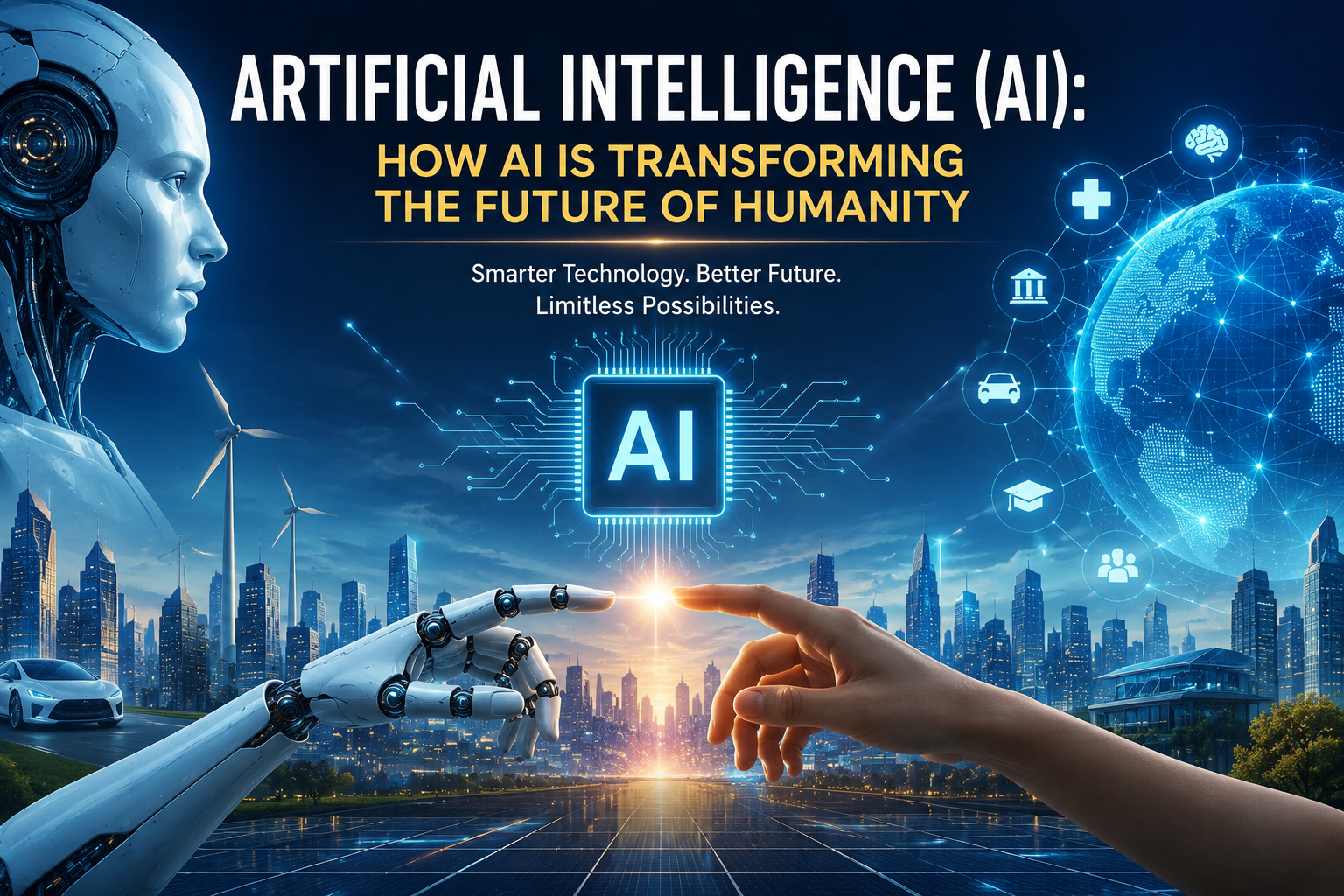
Artificial Intelligence (AI) is one of the most significant technological advancements of the 21st century. It refers to the ability of machines and computer systems to perform tasks that traditionally require human intelligence, such as learning, reasoning, problem-solving, decision-making, language understanding, and visual perception. AI has rapidly evolved from a concept found in science fiction to a reality that impacts nearly every aspect of modern life.
Today, AI powers search engines, virtual assistants, recommendation systems, autonomous vehicles, medical diagnostics, financial services, and countless other applications. As AI continues to develop, it promises to reshape industries, economies, and societies around the world.
Artificial Intelligence is a branch of computer science focused on creating systems capable of simulating human intelligence. These systems analyze data, identify patterns, learn from experience, and make decisions with minimal human intervention.
AI can be broadly categorized into two types:
Narrow AI is designed to perform specific tasks efficiently. Most AI systems used today belong to this category. Examples include:
General AI refers to machines capable of understanding, learning, and performing any intellectual task that a human can do. Unlike Narrow AI, General AI would possess flexible reasoning and adaptability across different domains. While researchers continue to work toward this goal, General AI has not yet been achieved.https://muuqtech.com/2026/07/08/mystic-labs-cbd-review/
The idea of intelligent machines dates back centuries, but AI as a scientific discipline emerged in the 1950s.
In 1956, computer scientist John McCarthy coined the term “Artificial Intelligence” during the Dartmouth Conference, which is widely considered the birth of AI research.
During the following decades, researchers developed programs capable of solving mathematical problems, playing games, and demonstrating basic reasoning abilities.
Despite initial optimism, progress was slower than expected due to limited computing power and insufficient data. Funding and interest declined during periods known as “AI winters.”
The resurgence of AI began in the 2000s due to three major factors:
These developments enabled breakthroughs in speech recognition, image classification, natural language processing, and robotics.
Machine Learning (ML) is a subset of AI that allows systems to learn from data without explicit programming. Instead of following fixed instructions, machine learning models improve their performance through experience.
Applications include:
Deep Learning is a specialized branch of machine learning that uses artificial neural networks inspired by the human brain.
Deep learning powers:
Natural Language Processing enables computers to understand, interpret, and generate human language.
Examples include:
Computer Vision allows machines to analyze and understand visual information from images and videos.
Applications include:
AI is revolutionizing healthcare by improving diagnosis, treatment planning, and patient care.
Examples include:
AI enhances learning experiences through:
Financial institutions use AI for:
AI powers modern transportation systems through:
In manufacturing, AI helps improve efficiency through:
AI is widely used in entertainment for:
AI offers numerous advantages, including:
AI can process vast amounts of data quickly and accurately, enabling organizations to improve productivity.
Advanced algorithms can analyze complex data and provide valuable insights for informed decisions.
AI reduces the need for manual labor in routine tasks, allowing humans to focus on creative and strategic work.
AI systems can minimize errors in areas such as medical diagnosis, financial analysis, and quality control.
AI drives technological innovation, creates new industries, and contributes to economic development.
Despite its benefits, AI presents several challenges.
Automation may replace certain jobs, requiring workers to develop new skills and adapt to changing labor markets.
AI systems often rely on large amounts of personal data, raising concerns about privacy and data protection.
AI models can inherit biases from training data, leading to unfair or discriminatory outcomes.
AI technologies may be vulnerable to cyberattacks or misuse, creating security concerns.
Some advanced AI systems operate as “black boxes,” making it difficult to understand how decisions are made.
The future of AI is expected to bring even greater advancements. Researchers are working on more sophisticated systems capable of reasoning, creativity, and autonomous decision-making.
Potential future developments include:
However, ensuring responsible AI development will require strong ethical frameworks, regulatory oversight, and international cooperation.
Artificial Intelligence has emerged as a transformative force that is reshaping the modern world. From healthcare and education to finance and transportation, AI is creating new opportunities while presenting important challenges. As technology continues to evolve, society must balance innovation with ethical responsibility to ensure that AI benefits humanity as a whole. By embracing responsible development and thoughtful governance, AI has the potential to improve lives, drive economic growth, and help solve some of the world’s most complex problems.
